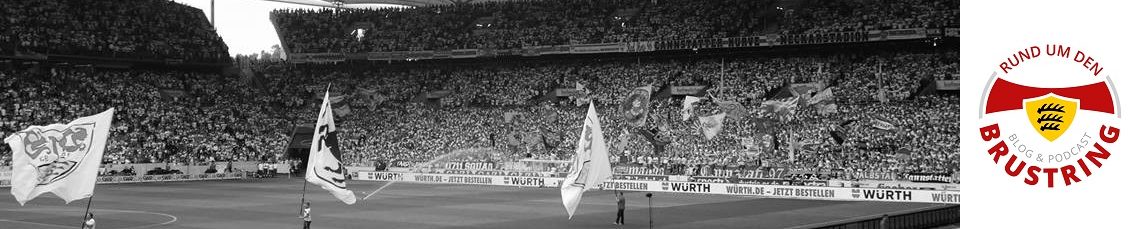

On Friday evening, VfB Stuttgart followed up a dreadful first half with a true display of energy against Union Berlin, ultimately securing a vital home win. This time, everything seemed to come together for success.
What’s the most unlikely scenario: that VfB overturned a 2–0 deficit after 50 minutes to win? That Atakan Karazor scored a Bundesliga goal? Or that Nick Woltemade bagged a brace? Of these, the first might seem the most plausible, but for it to happen, the other two events also had to occur on Friday night. Karazor’s first-ever Bundesliga goal was made possible by a major blunder from Frederik Rønnow, which he capitalized on with quick thinking. As for Nick Woltemade, his ability to score goals had become increasingly apparent in recent performances. But the technique and positioning he displayed to break through Union’s previously compact defensive line, which had stifled VfB’s attacking efforts, surprised everyone. Once again, Friday’s game showed: VfB almost always fights back, and they can rely on a relatively deep squad, where a striker can simply deliver his second Bundesliga brace of a still-young career when needed.
However, the game also highlighted an ongoing issue: VfB sometimes regresses into a kind of Matarazzo-era end-phase paralysis. This was evident before halftime, reminiscent of the disastrous start to the season before last, when nothing seemed to work. Before the break, the team in the iconic Brustring jersey was careless and unfocused in defense, while offering little creativity in attack beyond a single through ball to Demirović, who couldn’t finish from a tough position. A lot of this was down to the right flank: Josha Vagnoman was completely invisible as an offensive wide player, while Leo Stergiou and Anthony Rouault offered limited defensive stability. The 1–0 conceded goal was a culmination of errors: an unchallenged pass to a completely unmarked Andras Schäfer, who was given far too much space by Chris Führich and Stergiou. In the center, Anrie Chase’s wild positioning compounded the problem, and finally, Alex Nübel misjudged his attempt to catch rather than punch the ball, losing his balance in the process—leading to a shaky performance afterward.
Playing the “Ugly Goal” Game
VfB repeated their usual mistake against Union Berlin: conceding an ugly goal and then struggling to break down an opponent whose sole aim was to defend it. The kind of game that, like in the past, almost physically hurts to watch because the team looks utterly helpless while the opponent focuses solely on intercepting passes and launching quick counters. This raises the question: did we make Union look better than they are in the first half, or did Berlin simply lose control after taking the lead? Or was it just down to Nick Woltemade? Woltemade came on at halftime for the luckless Stergiou, which allowed Vagnoman to return to his right-back position. Union couldn’t cope with Woltemade’s ball control and movement. Within ten minutes of what seemed like a decisive 2–0 deficit, he had leveled the game.
Union, a team that had scored just ten goals but conceded only eleven before this match, clearly couldn’t handle conceding so many. The second half turned into a wide-open game. VfB overwhelmed the visitors at times, though they also allowed chances on the other end. The nerves of the Köpenickers were evident in their reactions to Vertessen’s dive, which led to a flurry of yellow cards. Fittingly, the winning goal came from a goalkeeper error in a chaotic game. Once again, VfB showcased their individual quality and, crucially, scored at least one more goal than their opponent.
Defensive Frailties Are a Burden
After the victory in Regensburg, some said the performance there wouldn’t suffice against Union. It’s hard to entirely disagree, as either the team wasn’t prepared for Union’s exhausting style of play or they underestimated how Union plays like, well, Union. The growing number of goals conceded is becoming a burden. Against Bremen and Frankfurt, more could have been achieved if the defense hadn’t been so porous—not to mention Belgrade, which doesn’t even bear discussing. This isn’t about individual players having disastrous 90-minute performances. Instead, the team as a whole struggles to prevent goals from crosses or corners, such as those scored by Doekhi, Njinmah, Stage, or Ekitiké. It’s either the positioning or fatigue. The former can be trained; the latter must be endured or managed through rotation.
In the end, the team once again turned things around, securing perhaps the most important win of this grueling first half of the season. Comparing this match to the 3–2 win against Hamburg in the second division might be a stretch, as Union isn’t a direct competitor for the top three spots. But this collective triumph, exemplified by Karazor celebrating with the bench, could serve as a catalyst for the year’s final stretch against Bern, Heidenheim, and St. Pauli. However, they can’t afford another first half like this on Wednesday, as previous Champions League matches have shown. Between Heidenheim and St. Pauli, the team will finally have time to train—and perhaps get Jamie Leweling and Deniz Undav back in the squad. Things are already looking brighter than they did at 9:15 p.m. on Friday night.
Final Note: Best wishes for a speedy recovery to the Union fan who had to be resuscitated!
Picture: © Sebastian Widmann/Getty Images