Floodlights, Celtic Park, and all of it on a rainy Thursday evening in February. What could scream Europa League knockout match more than that?
For VfB, who in their recent history have only known two-legged ties from relegation playoffs, this is a return to where they belong. In the 2000s, they were regular participants in the UEFA Cup and later the Europa League, repeatedly reaching the knockout rounds and even the Round of 16—where their journey usually ended. The last time VfB managed this was in the 2012/13 season, when they lost and were eliminated in a behind-closed-doors match against Lazio at the Stadio Olimpico. Who could have guessed what the next twelve to thirteen years would bring? Now, somehow, they’re back—stronger and more confident than ever. The road back to the knockout rounds begins in Glasgow, where Celtic await the Swabians.
The historic Celtic Park—a year older than Verein für Bewegungsspiele—likely appears on many football fans’ bucket lists. Few stadiums embody Scottish football quite like this one. In the north of the British Isles, football is more than just a pastime. For Celtic supporters, it is a place of resistance and of Scottish-Catholic identity. The club was founded by Irish immigrants to raise funds for Glasgow’s poor districts. Celtic FC quickly became a dominant force in Scotland, competing with Rangers FC for supremacy in Scottish football. Rangers represent the stark opposite—loyalist and Protestant—making matches between the two clubs not just sporting contests but political clashes as well.
Celtic are among the most successful teams in the world. Domestically, they dominate the league, but internationally they are more of a small fish. “The Bhoys” regularly compete in the Champions League or Europa League, yet they have won the European Cup only once—in 1967.
Celtic are currently experiencing a certain degree of unrest. They sit third in the Scottish Premiership, behind Rangers and the surprise league leaders Heart of Midlothian FC. Their progression in the Europa League was anything but convincing. Only thanks to a 4–2 win over already-eliminated FC Utrecht did they qualify for the playoffs. Accordingly, the odds and analytics sites see VfB as favorites. OPTA estimates VfB’s chances of winning at 50.7%—despite the fact that we’re playing away.
Squad situation
Apart from the development players Jovanovic and Justin Diehl, all registered VfB players are fit.
Possible starting lineup
At the moment, this would likely be our strongest eleven. Alternatively, Assignon could replace Vagnoman and/or El Khannouss could come in for Undav.
Statistics
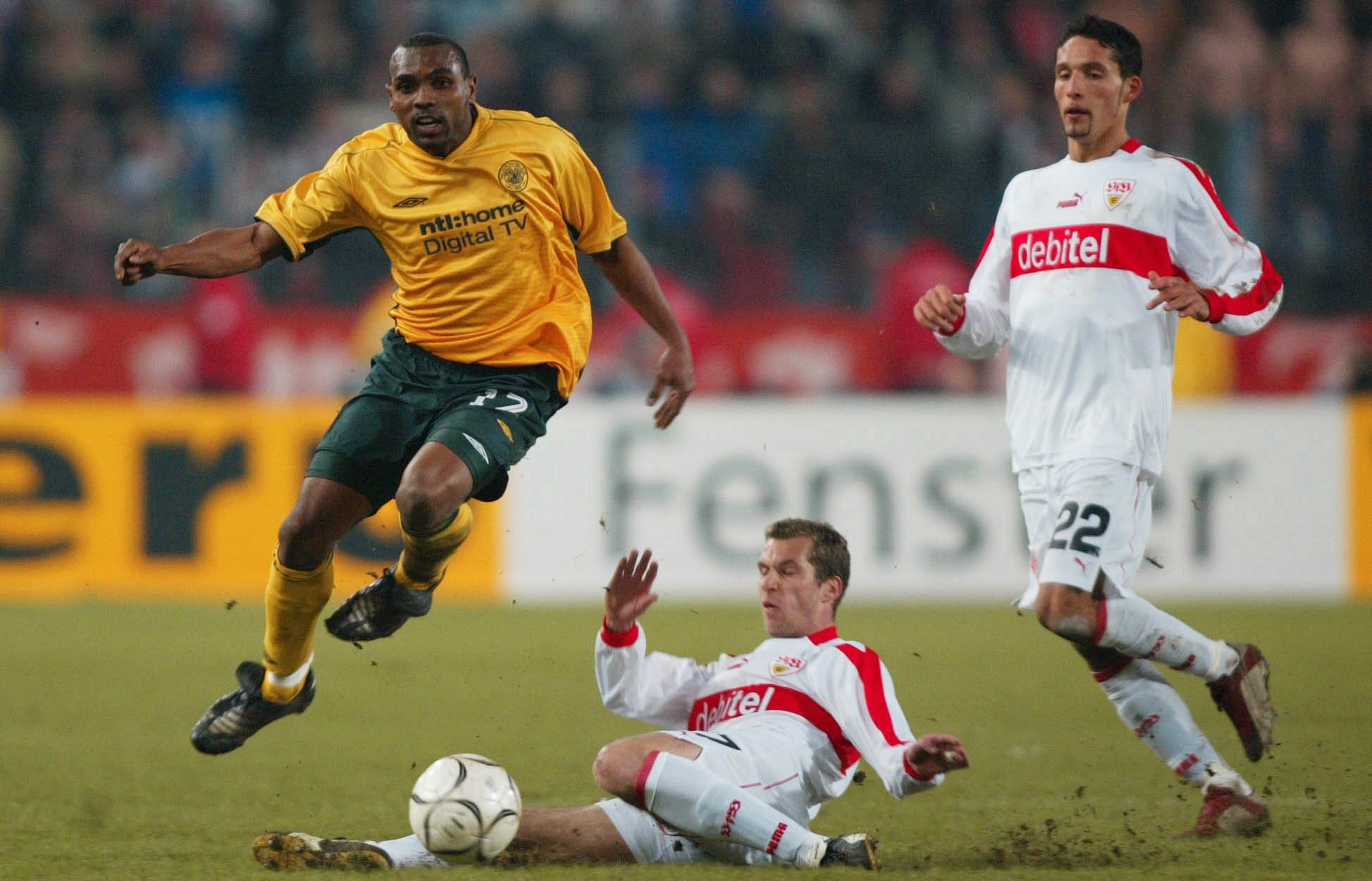
Stuttgart have now played ten matches against Scottish teams—twelve if you include the infamous Inter-Cities Fairs Cup and the two matches against Dunfermline Athletic FC. The Swabians recorded five wins, two draws, and four defeats. We have also faced Celtic before. Almost exactly 13 years ago, the teams met in the Round of 16. After a 3–2 home win and a 1–3 away defeat, VfB were eliminated. Celtic, meanwhile, reached the final but lost in stoppage time to FC Porto.
Conclusion
Two matches against an iconic opponent await us—one that is not lacking in sporting quality. It will be a tough away game for our boys, but I remain optimistic and believe we will leave Celtic Park with a victory.
Title image: © Sandra Behne/Bongarts/Getty Images